
Overview & Objective
As generative AI transforms the design landscape, knowing how to direct, curate, and integrate AI into commercial design workflows is becoming an essential skill.
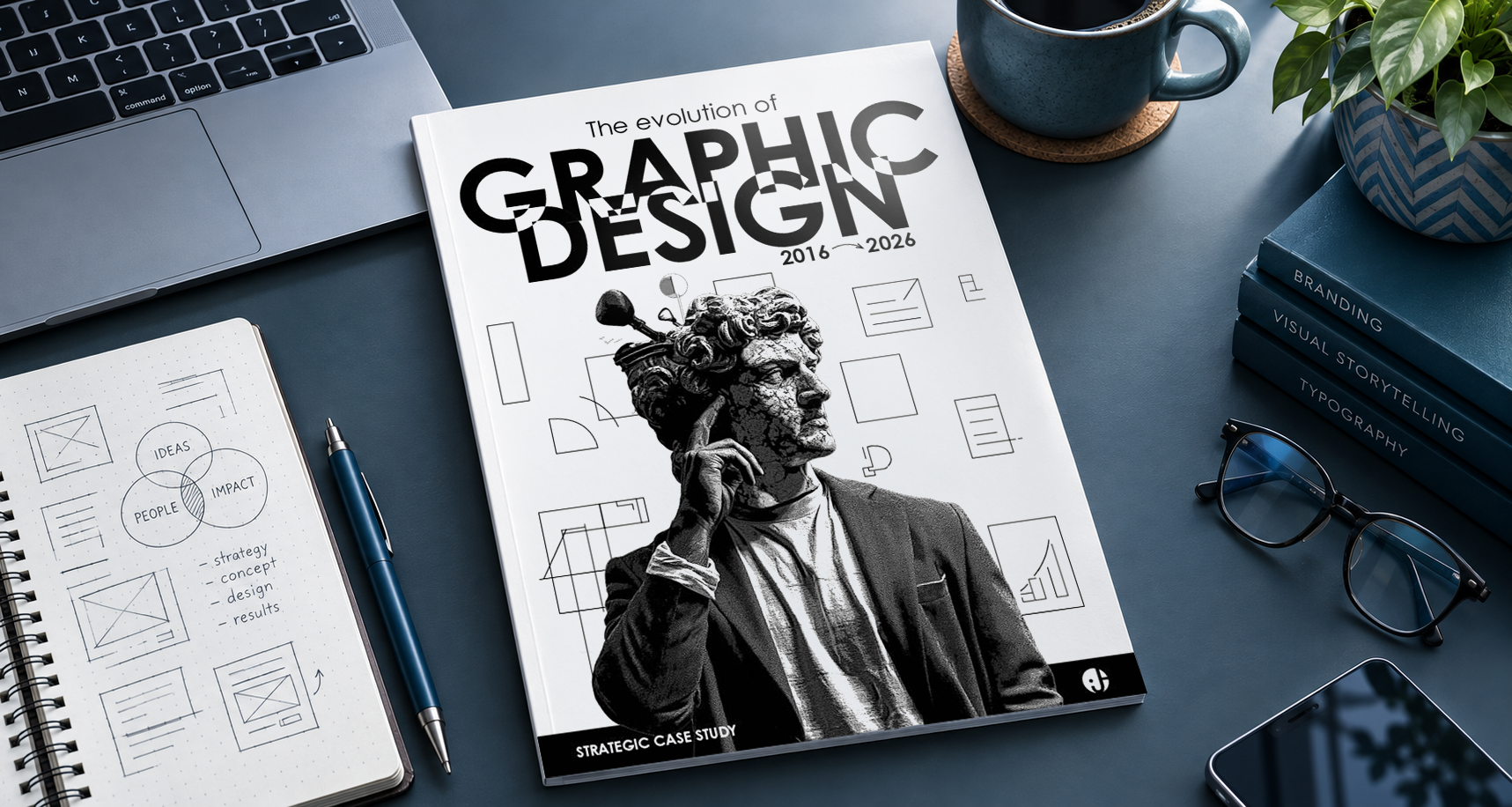
The primary objective of this personal project was to create a commercially publication-ready white paper examining the shift in graphic design over the past decade (2016–2026). The project served as a real-world test case to prove how a modern designer can leverage generative AI as an acceleration engine for research, draft copywriting, and asset generation—while keeping human creative direction, visual judgment, and technical pre-press layout firmly at the core.
Creative Vision & Concept Strategy
• The Core Metaphor: Historical Thinkers in a Modern World
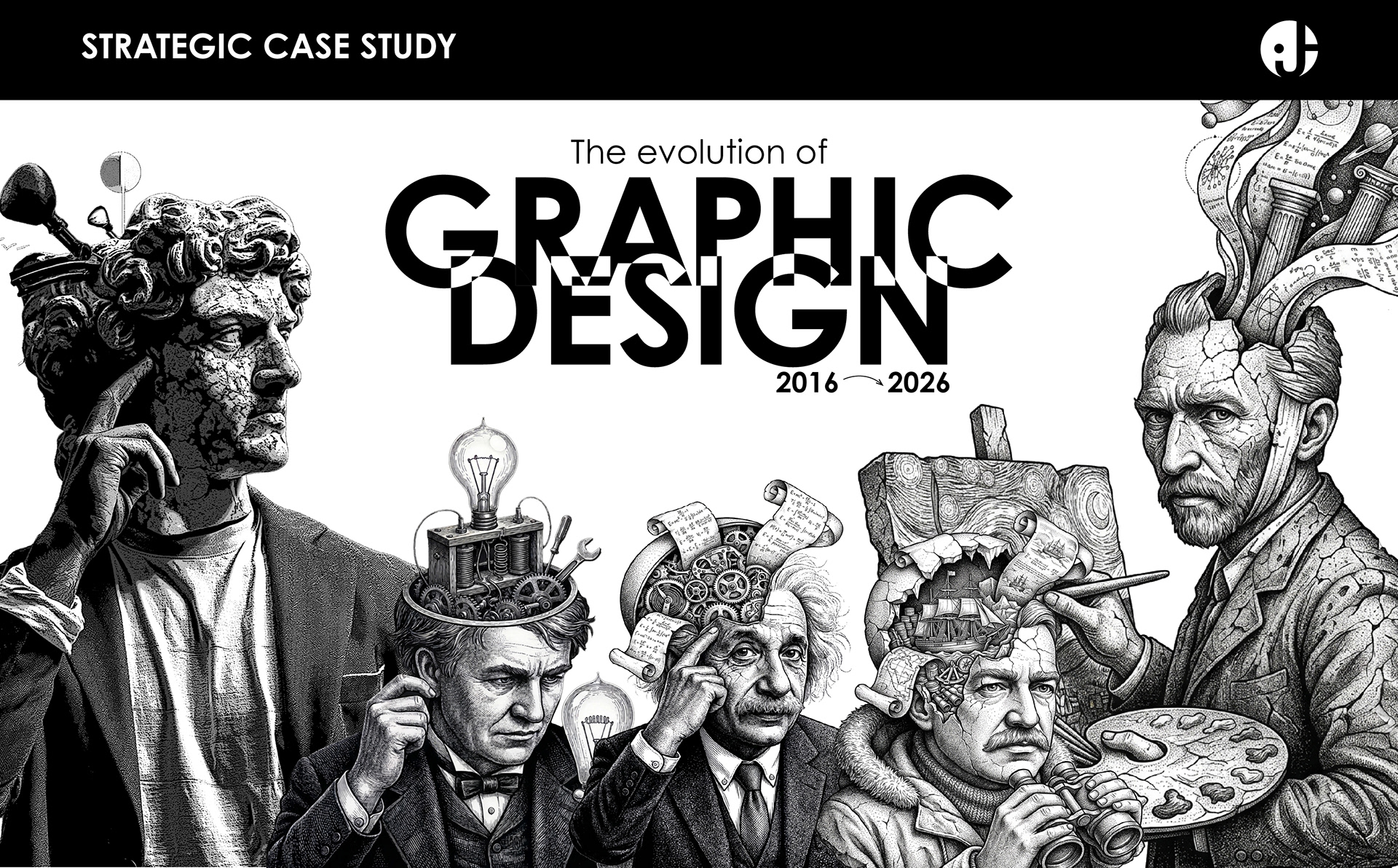
To reflect the white paper's thesis—bridging foundational human creativity with automated technology—I conceptualized an art direction theme inspired by classic editorial covers like The Thinking Man.
To reflect the white paper's thesis—bridging foundational human creativity with automated technology—I conceptualized an art direction theme inspired by classic editorial covers like The Thinking Man.
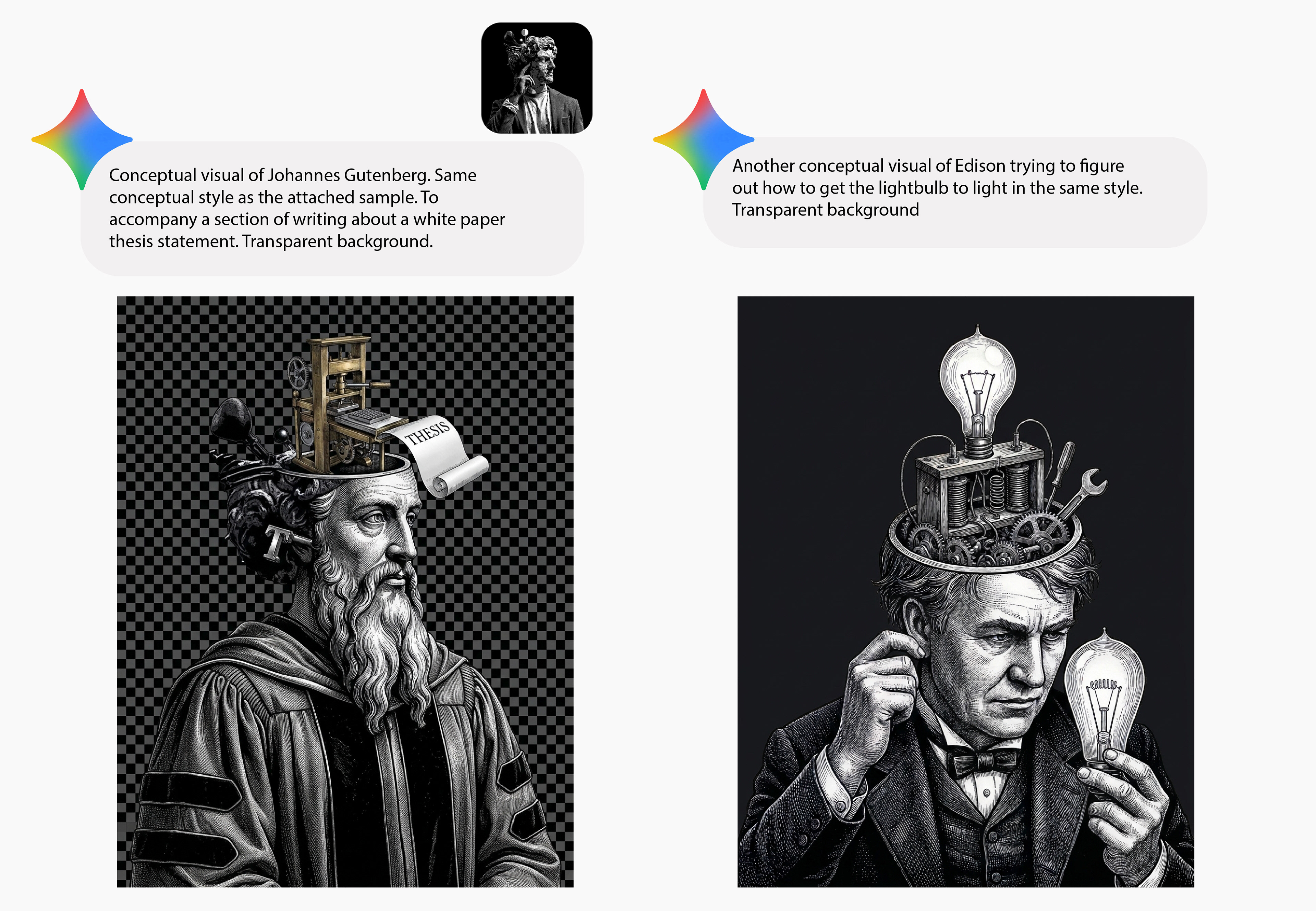
• Art Direction: I directed AI visual tools to generate etchings and woodcut-style illustrations depicting historical scholars, artists, explorers, and inventors.
• Conceptual Narrative: Merging historical visionaries with cybernetic and mechanical elements visually illustrates the tension and synergy between timeless human intellect and modern AI synthesis.
The Human-AI Hybrid Workflow
I structured the creation process into four distinct phases to demonstrate control over every step of production:
[ Research & Copy Generation ] ➔ [ Editorial Curation ] ➔ [ Conceptual Art Direction ] ➔ [ InDesign Production ]
Phase 1: Research, Sourcing & Draft Copywriting
• Prompt Engineering: Used targeted AI prompts to perform market research, gather timeline data (2016–2026), structure the thesis, and draft the initial content.
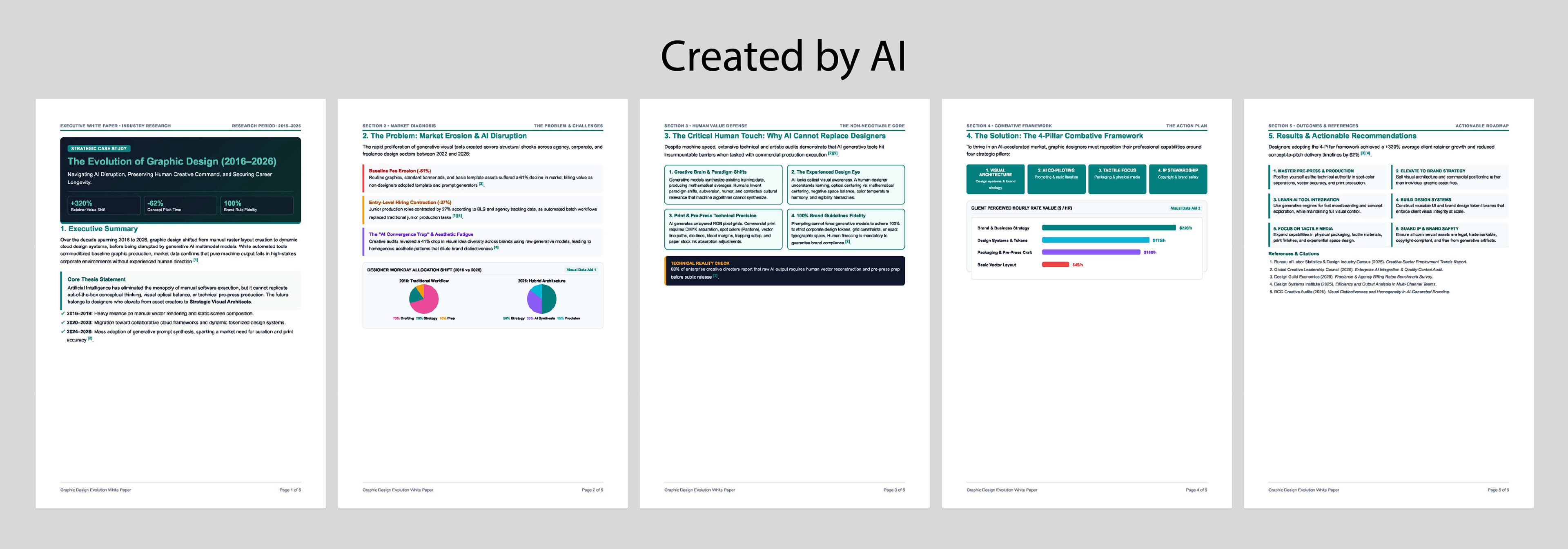
• Comparative Testing: Utilized AI to auto-layout a baseline draft version of the white paper to directly compare "AI-generated layout" against "Human-directed visual architecture".
Phase 2: Human Editorial Curation & Refinement
• Substantive Editing: Unfiltered AI text often lacks nuanced visual vocabulary and real-world brand experience. I heavily edited, trimmed, and re-wrote the raw AI copy into a polished, strategic narrative—creating a distinct final draft separate from the initial automated output.
Phase 3: Conceptual Image Generation & Asset Prep
• Thematic Consistency: Prompts were crafted to produce a consistent woodcut/engraving aesthetic.
• Image Editing & Pre-Press: I cleaned up raster artifacts, balanced tonal values, removed backgrounds, and prepared the visual assets for crisp high-resolution layout.
Phase 4: Layout & Visual Hierarchy (Adobe InDesign)
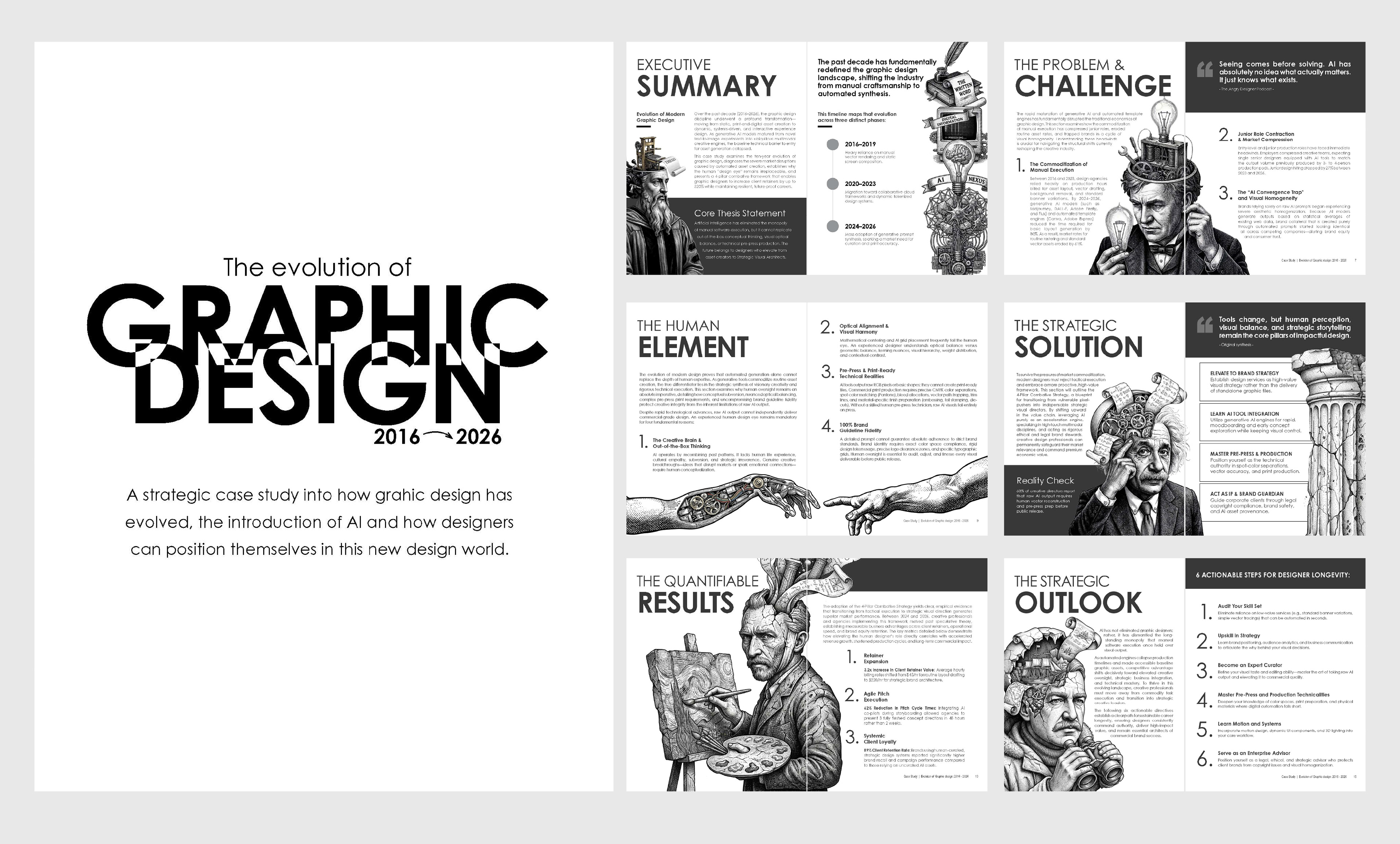
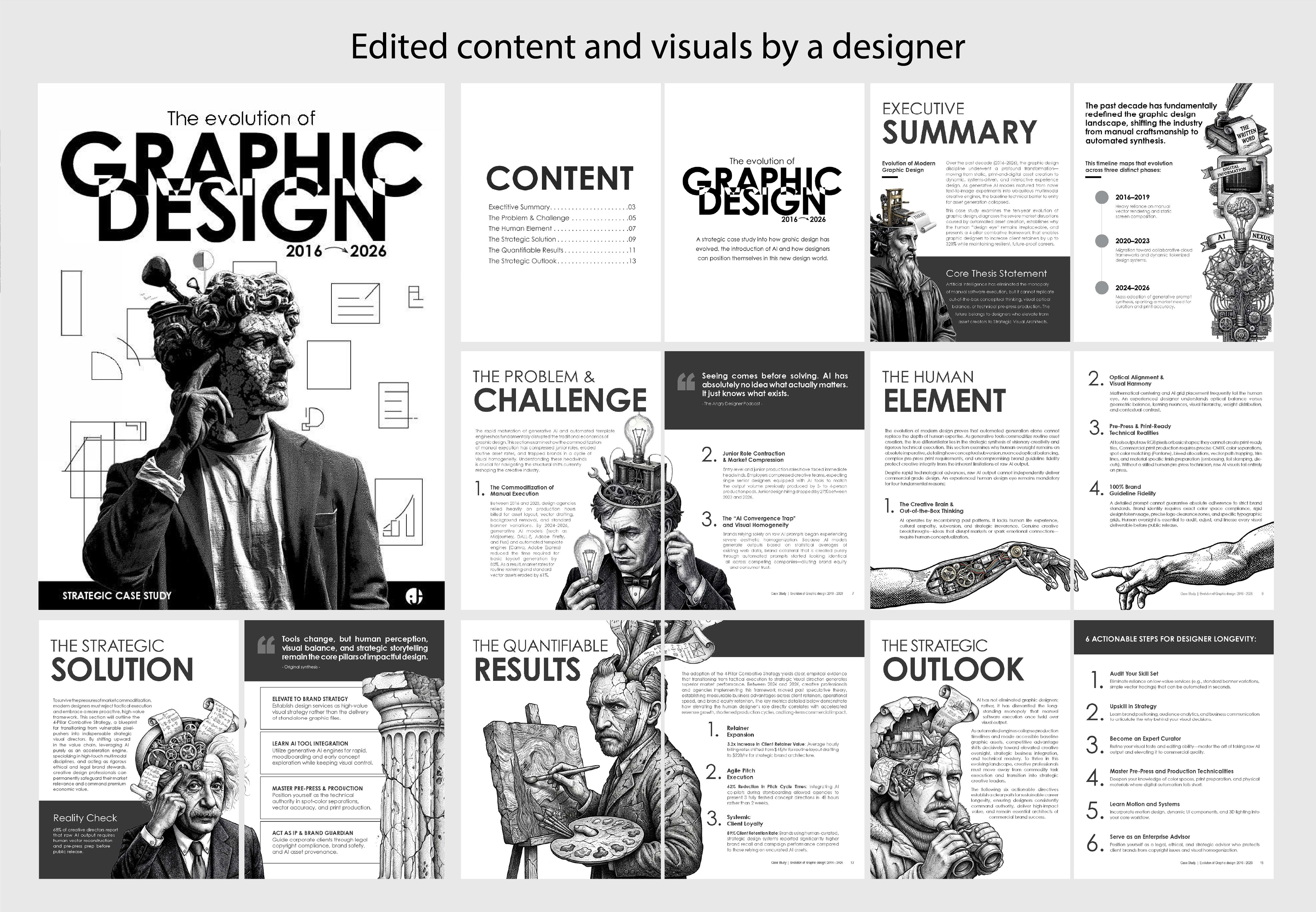
• Typography & Grid Systems: Built custom page grids, typographic hierarchy, sidebars, pull-quotes, and section markers in Adobe InDesign.
• Optical Harmony: Applied human visual judgment to fine-tune kerning, white space, optical balance, and visual flow across every spread—technical nuances that automated engines consistently fail to master.
** Time Breakdown & Efficiency Gain **
By treating AI as a co-pilot rather than a replacement, I completed a high-caliber 15-page publication in just 16 hours over 3 days